Location & Hours
810 W Bartlett Rd
Bartlett, IL 60103-4402
| Mon - Thurs: | 9a - 1p, 2p - 5p |
| Friday | 9a - 12p, 1p - 5p |
| Saturday: | 8a - 12p |
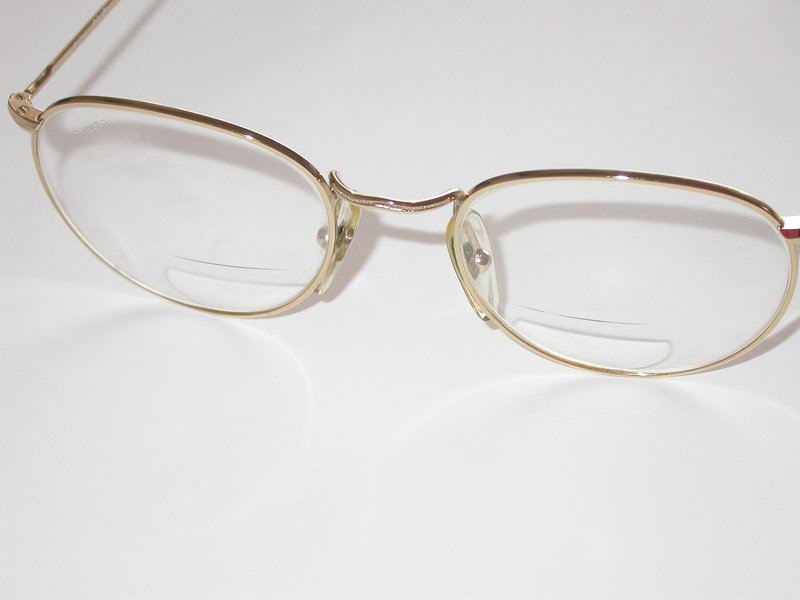
For many people, different lenses are needed for seeing at different distances. Bifocal lenses allow the wearer to look through two areas of the lens. One area focuses on distant objects. The other is used for reading. A little-known fact is that bifocals were invented by Benjamin Franklin, and his style of bifocals are still available today.
Most of the time the “reading” area is smaller, shaped like a sideways “D”, and found in the lower hemisphere of the lens. These bifocals are called line bifocals or flat-tops. If you are focusing on distant objects, you look through the top half of the lenses. To read a book, magazine, or newspaper, you look through the “reading” area. The Franklin style lenses are less common, and are split horizontally down the middle of each lens. One thing that is difficult about using bifocals is dealing with the line between the two vision areas. Fortunately, recent technologies have developed a new type of lens, called the no-line, or progressive, lens.
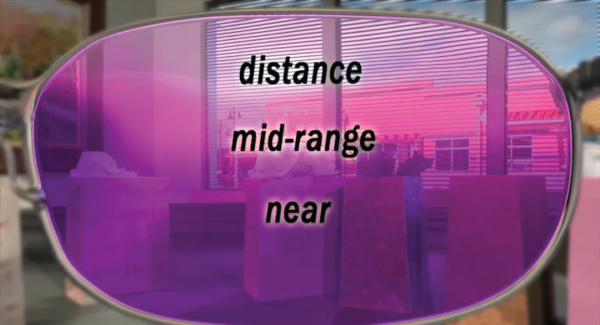
One of the main problems with bifocal and trifocal lenses is the issue of eye fatigue. It can be difficult to switch from one focusing power to another. Your eyes can tire, which can even lead to a headache, sore neck and sore back.
A variation of bifocals and trifocals is the no-line lens or progressive lens. No-lines provide a smooth transition from focusing on nearby to distant objects because they do not have a distinct line separating the focusing powers. Instead, a gradual change in power allows the wearer to focus on objects at all distances. Distant objects are viewed through the upper portion of the lens, while near objects are viewed through the middle or lower portion of the lens. These are also great for computer users.
Bifocals allow the wearer to read through one area of the lens, and to focus on distant objects through another area of the lens. As the eyes age, though, a stronger prescription is often needed to read. This would be fine, but the stronger prescription that allows for reading makes it difficult to focus on objects at intermediate distances, such as grocery items on a shelf or your speedometer. Thus, trifocals are necessary for a third prescription for intermediate focusing.
Trifocals, also known as line trifocals, feature three areas of focusing power, each separated from the other by a distinct line. The three windows allow for focusing on distant objects, intermediately distanced objects, and for reading. The downside of trifocals is dealing with the lines between the different focusing powers. Fortunately, recent advances in technology have led to developments in no-line, or progressive lenses.
Previous to the last few years, the only materials available for use as lenses were glass and a hard resin called CR-39. But recently, high index lenses have become available. High index materials are named because they have a higher index of light refraction. Basically, they can do the same job that glass or CR-39 does, but high index lenses are much thinner and lighter. With high index lenses, you can avoid having “soda bottle” lenses.
When learning about high index lenses, you may hear many unfamiliar numbers and terms. Here are a few things to remember.
Polycarbonate
The first and still the most popular high index plastic is polycarbonate. Polycarbonate was originally developed for fighter jet cockpits. It is very strong, very light, and resistant to scratches and breaking. Most sports lenses are made of polycarbonate.
Mid-Index
Other high index materials are classified by numbers. The higher the number, the thinner and lighter the lens. The lower numbers are classified as mid-index lenses. Mid-index lenses, such as 1.54, 1.56, and 1.57, are thinner than glass, and nearly as strong as CR-39.
High-Index
High index lense are much thinner than regular glass or plastic. Talk with your doctor to decide which high index lens is right for you.
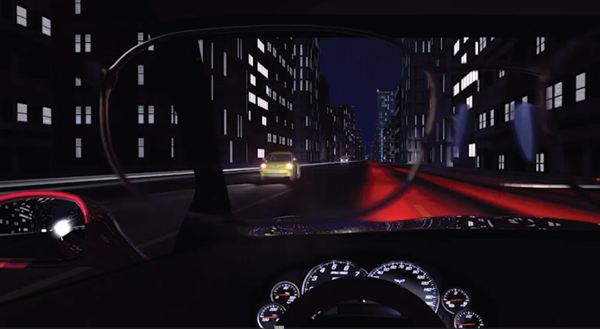
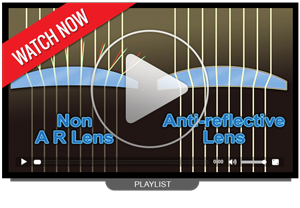
Normal eyewear often creates glare, reflections, and “ghost images.” Now all that can be eliminated with an anti-reflective coating.
What we see is a result of light being sensed by our eyes. With normal glasses, much of the light reflects off the lenses. This produces glare. It also reduces the wearer’s visual acuity. In other words, the light reflection is both a cosmetic and visual problem.
Anti-reflective coatings increase light transmission through the lenses to 99.5 percent. They make it easier to see and easier for others to see you. These coatings are especially useful for those viewing computer screens and driving at night.
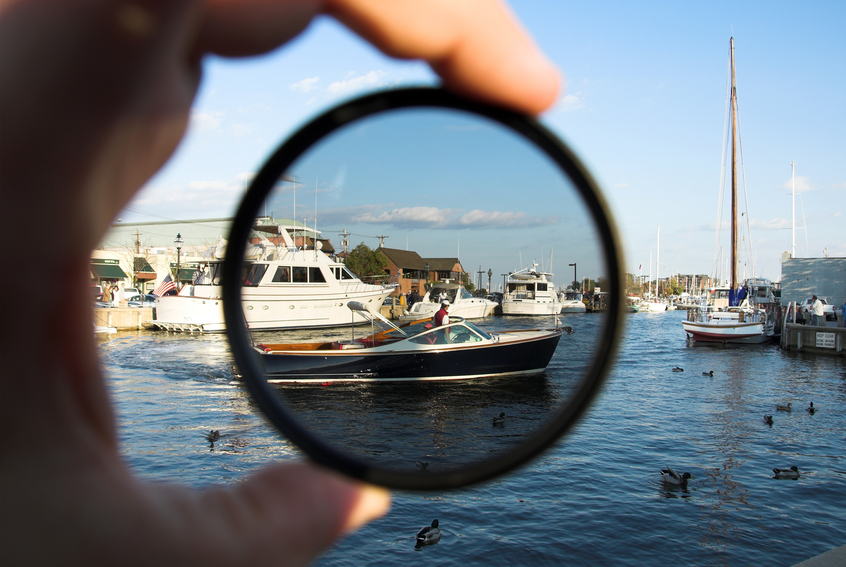

Glare from wet roads, light reflecting off other vehicles, and glare from your own windshield can be annoying and dangerous. To eliminate this glare, we offer polarized lenses. Polarized lenses eliminate the majority of glare, reducing eye strain and increasing visibility. Polarized lenses are the most effective means to reduce glare.
Most glare comes from horizontal surfaces, so the light is “horizontally polarized.” Polarized lenses feature vertically-oriented “polarizers.” These polarizers block the horizontally-polarized light. The result is a glare-reduced view of the world. Polarized lenses can make a world of difference for any outdoor enthusiast. Fisherman can eliminate the bright reflections from the water and actually see into the water more easily than with other sunglasses, golfers can see the green easier, and joggers and bikers can enjoy reduced glare from the road. In addition, drivers can enjoy the safety and comfort that polarized lenses provide while driving.
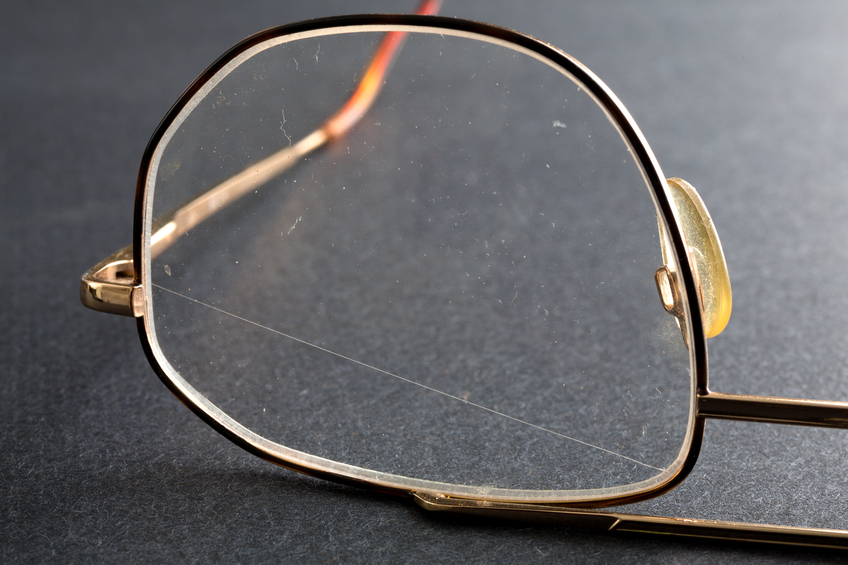
If you have hard resin lenses (CR-39), you should consider getting a scratch-resistant coating. Resins and plastics are more susceptible to scratches than glass. Scratches damage the cosmetic look of the lenses and compromise their performance. With a scratch-resistant coating, you do not have to worry as much about minor scratches on your lenses.
Another advantage of scratch-resistant coatings is that most coatings come with a one-year warranty. They are a great investment to prevent minor scratches. However, it is important to remember that scratch-resistant does not mean scratch-proof. All lenses are susceptible to scratches.
If you have ever felt frustrated at needing both prescription glasses and prescription sunglasses to accommodate an outdoor lifestyle, you should consider photochromic lenses. Photochromic lenses darken when exposed to UV rays. The change is caused by photochromic molecules that are incorporated into the lens or into a coating on the lens. When the wearer goes outside when it's bright, the lenses darken automatically. When the wearer goes back inside, the glasses become clear.
There are a variety of photochromic options available. Depending on what you choose, you can customize the lenses to your needs. Some lenses darken only in direct sunlight, while others darken in little or no direct light. Some are designed to darken while you are in the car to reduce road glare while you are driving. You can even choose the color of the tint. Ask your doctor what options are available.
Your glasses do not have to be an eyesore to those around you. Eyeglasses can be a stylish accessory, a part of your personality, or a way for you to be unique. There are a variety of frames to choose from, but you may not know that there are also many ways to improve the appearance of the lenses. Cosmetic tints are now available. These tints offer a variety of colors and shades. You can choose light blue or any other color of the rainbow. Some lenses are clear at the bottom and gradually get more colored towards the top of the lenses. There are many ways to adjust your lenses to whatever style suits your personality. Some tints are also functional.
Recently there has been much attention on a condition called Computer Vision Syndrome, or CVS. A special tint for your glasses can reduce eyestrain associated with CVS.
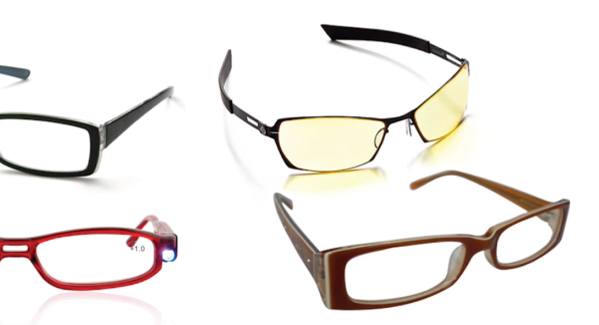

We all have heard the phrase, “Different strokes for different folks.” Well, this also holds true when it comes to selecting glasses. There are different lenses for just about everybody. No matter what your particular need, there is probably a specialty lens designed for you.
For example, a specialty lens that is becoming increasingly common is one designed for computer users. Computer lenses have “windows” designed for viewing your computer screen, documents on your desk, and distant objects. The lenses are designed to reduce Computer Vision Syndrome, or CVS, which is characterized by headaches, eye strain, neck and back aches, dry eyes, blurred vision, and double vision.
Another example is called the double D-segment lens, also known as the double flat-top lens. If you look through most of the lens, you can focus on distant objects. But you can also look through a D-shaped segment near the top of the lens to see nearby overhead objects more clearly. This is very useful if you are involved in work where you are looking at nearby objects above your field of vision, as with carpenters and pilots. The D-shaped segment near the bottom of the lens allows for reading.